
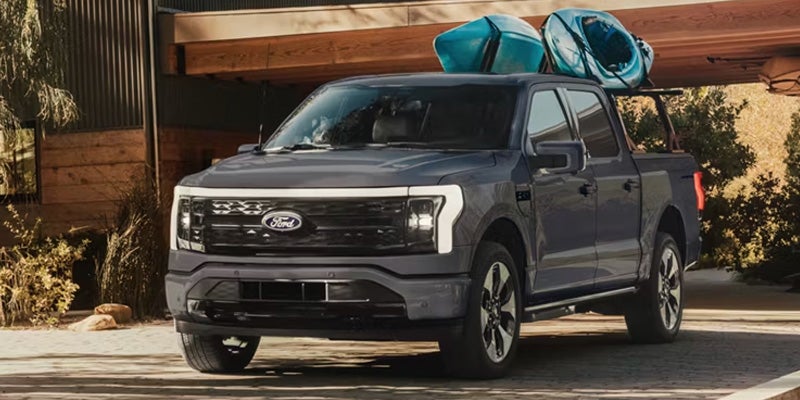
A 2026 Ford F-150® can be 3 very different trucks before you’ve even chosen an engine. Regular Cab, SuperCab, and SuperCrew® configurations determine how many people you can carry, how much room they get, and which bed lengths are available. For truck buyers around Medford, Wisconsin, choosing among Ford truck cab sizes should start with the job.
Regular Cab Puts the Bed First
The F-150® Regular Cab is the simplest configuration: 2 doors, 1 row, and seating for up to 3. More importantly for work-truck buyers, it can be paired with either a 6.5-foot or 8-foot bed. That 8-foot box is the longest available F-150® bed and gives contractors, farmers, and other commercial users valuable cargo length without adding a larger passenger compartment they may rarely use. There’s nothing complicated about the argument. If you spend most of the workday alone or with 1 passenger and regularly need the bed, Regular Cab puts the space where it earns its keep.
SuperCab Adds Seats Without Giving Up the 6.5-Foot Bed
SuperCab is the compromise, and that isn’t a criticism. It adds a second row, rear-hinged rear doors, and seating for up to 6 while retaining a 6.5-foot bed. That makes it useful for drivers who need additional passenger capacity occasionally but don’t want to move directly into the much larger rear compartment of a SuperCrew®. Think work crew during the week, friends or family on the weekend, and tools or equipment in the bed throughout both. In the F-150® Regular Cab versus SuperCab versus SuperCrew® comparison, SuperCab occupies a useful middle position that neither of the other configurations quite duplicates.
SuperCrew® Is the Passenger Hauler
If people regularly occupy the back seat, SuperCrew® is where the numbers begin to tell the story. There are 4 full-size doors, seating for up to 6, and 43.6 inches of rear legroom. That gives adult passengers enough space for longer drives rather than treating the second row as occasional-use seating. Bed choices are 5.5 feet or 6.5 feet, so choosing SuperCrew® doesn’t automatically mean accepting the shortest box. A 6.5-foot-bed SuperCrew® provides an appealing combination for owners who genuinely need both cabin and cargo space. The tradeoff is overall truck size. More cab and more bed eventually mean more vehicle to maneuver, something worth considering around crowded jobsites and parking areas.
The Cab Is Only Half the Configuration
Once you know where the people and cargo are going, you can start thinking about power. Available F-150® engines include a 2.7L EcoBoost® V6 producing 325 hp and 400 lbs. ft. of torque and a 5.0L V8 producing 400 hp and 410 lbs. ft. of torque. The available 3.5L EcoBoost® V6 produces 382 hp and 500 lbs. ft. of torque, while the 3.5L PowerBoost® Full Hybrid V6 produces 420 hp and 570 lbs. ft. of torque. Maximum available towing capacity reaches 13,500 lbs. with the 3.5L EcoBoost® V6 when properly configured. Available Pro Trailer Backup Assist™ and Pro Trailer Hitch Assist™ can help with trailer maneuvering and hookup. Ford BlueCruise is also available for compatible hands-free highway driving.
Choose the F-150® Around the Work
The best Ford truck cab size isn’t necessarily the biggest one. Regular Cab gives you up to 3 seats and access to the 8-foot bed. SuperCab expands capacity to 6 while retaining a 6.5-foot bed. SuperCrew® provides the most useful rear passenger space and offers 5.5-foot and 6.5-foot beds. Visit Medford Motors, Inc. in Medford, WI, to compare available 2026 Ford F-150® cab and bed configurations in person. Once you know which combination fits your workload, schedule a test drive online and see how the truck works from behind the wheel.